Chinkin (沈金) — The Art of Engraving Light into Lacquer
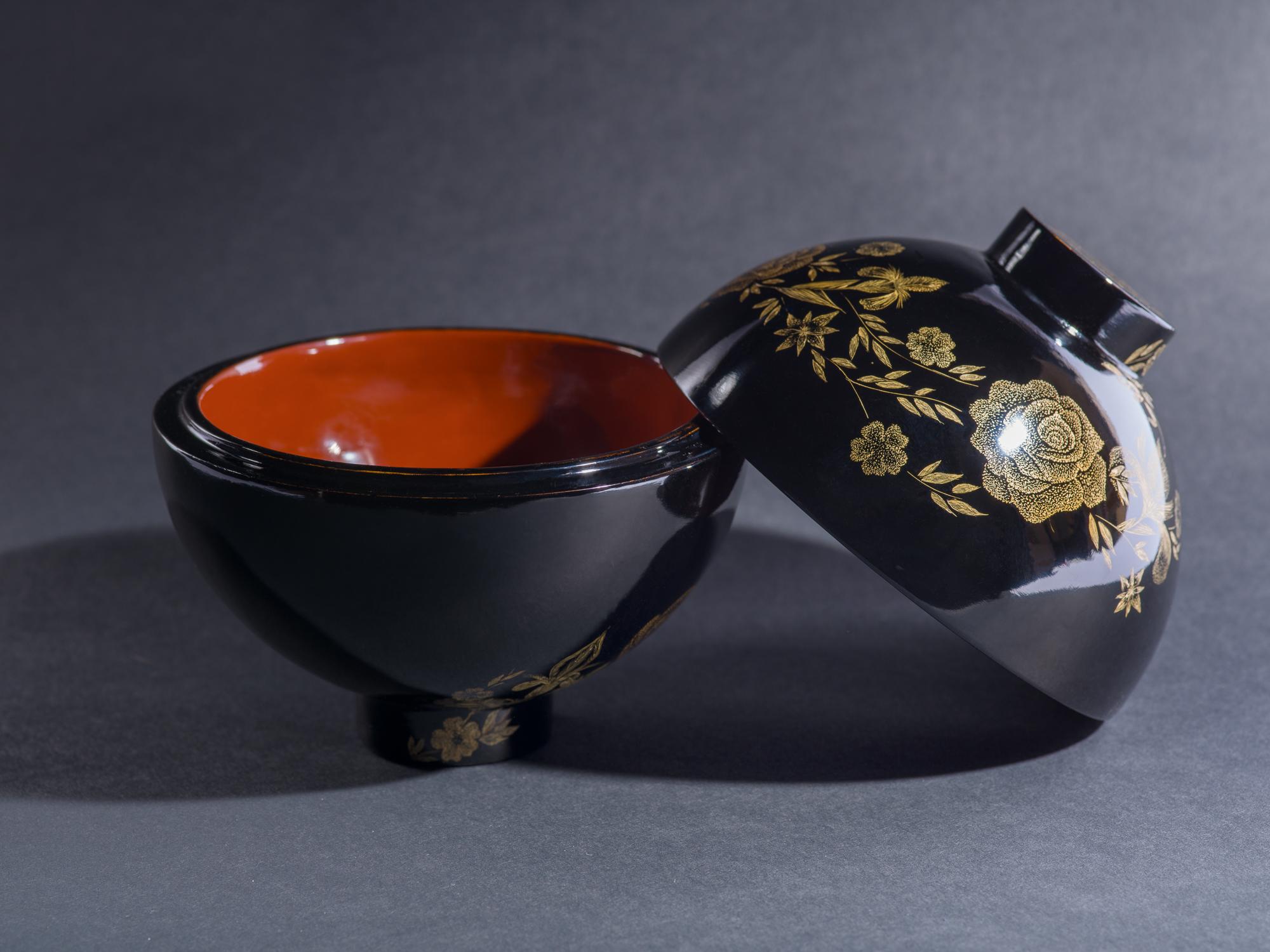
Chinkin, meaning “sunken gold,” is a traditional Japanese decorative technique developed during the Muromachi period (14th–16th century). It is practiced on hardened urushi lacquer surfaces and is distinguished by its precision, restraint, and quiet luminosity.
Unlike surface painting techniques, Chinkin is an art of incision. The design is not applied onto the lacquer—it is carved into it.
⸻
The Process: From Lacquer to Light
The process begins long before the engraving itself. A Chinkin piece requires a perfectly prepared lacquer surface, built through multiple layers of urushi (natural Japanese lacquer), each applied, cured, and polished with meticulous care. This can involve dozens of layers, culminating in a deep, mirror-like finish known as roiro migaki.
Once the surface has fully hardened—often after several weeks—the engraving begins.
Using extremely fine chisels (called chinkin-bori tools), the artist incises the design directly into the lacquer. These cuts can vary in depth, angle, and rhythm, allowing for subtle variations in line, texture, and light reflection. The technique often incorporates tenbori, a method of puncturing the surface with a needle-like tool to create delicate dotted gradients—an essential element for rendering volume and softness.
After the engraving is complete, a small amount of urushi is brushed into the incised lines. While still wet, fine metal powders—traditionally pure gold or silver—are carefully applied and pressed into the grooves. The excess is gently wiped away, leaving the metal embedded only within the carved design.
The result is not a surface decoration, but a luminous presence emerging from within the lacquer itself.
⸻
A Discipline of Precision and Patience
Chinkin demands absolute control. Each incision is irreversible—there is no possibility of correction once the lacquer is cut. The artist must therefore work with unwavering precision, guided by both technical mastery and intuitive sensitivity.
The visual language of Chinkin is inherently subtle. Rather than relying on bold contrasts, it reveals itself through light: as the surface shifts, the embedded metal catches and reflects illumination in a quiet, refined manner.
⸻
Beyond Technique
More than a method, Chinkin is a discipline rooted in time, attention, and restraint. It invites a slower way of seeing—one where detail unfolds gradually, and beauty resides in nuance.
In contemporary practice, while the materials and principles remain unchanged, each artist brings their own sensibility to the technique—bridging tradition with personal expression.