A Material Older Than History
Urushi (漆) is not simply a ycoating it is one of humanity’s oldest known engineered materials. Archaeological discoveries in Japan date its use back to the Jōmon period (over 8,000 years ago), where it was already employed to waterproof tools, bind materials, and decorate ritual objects.
Unlike many traditional crafts influenced by continental Asia, some researchers believe that Japan independently developed lacquer technology, revealing an early mastery of both material science and aesthetics.
From its earliest forms, Urushi was not merely functional it was already symbolic, used on sacred objects, burial items, and imperial artifacts, suggesting a deep spiritual relationship between humans and this living material.
⸻
The Tree and the Rarity of the Material
Urushi is harvested from the sap of the lacquer tree, Toxicodendron vernicifluum. The process, called urushikaki (漆掻き), is highly specialized and increasingly rare.
What is often overlooked even among practitioners is the extreme scarcity of the material:
• A tree must grow 10 to 15 years before it can be tapped
• It yields only about 200 ml of sap in its lifetime
• After harvesting, the tree is typically cut down
This means every gram of Urushi carries the time of a decade, making it one of the most precious natural materials used in craft.
⸻
Chemical Nature: A Natural Polymer Before Its Time
Urushi is fundamentally different from all modern paints and varnishes.
Composition
Raw Urushi is a complex emulsion composed of:
• Urushiol (60–65%) the reactive oil
• Water (25–30%)
• Plant gums and enzymes (including laccase)
A Rare Phenomenon: Moisture-Curing Polymerization
Unlike conventional coatings that dry by evaporation, Urushi hardens through a biochemical reaction:
• Urushiol oxidizes and polymerizes
• The enzyme laccase catalyzes the reaction
• Humidity (not dryness) is required
• Optimal curing: ~20–30°C and 80–90% humidity
This process is known as aqua-polymerization, forming a dense, cross-linked molecular structure.
In essence, Urushi is a natural thermosetting polymer, comparable to modern industrial plastics but entirely organic.
⸻
The Paradox of Urushiol: Toxic and Eternal
Urushiol is both the essence and the danger of Urushi.
• In its raw state, it causes severe allergic reactions, similar to poison ivy
• It penetrates the skin and triggers immune responses
• Even vapors can cause irritation
Yet after polymerization:
• The molecule becomes chemically inert
• The surface becomes safe, stable, and non-toxic
This transformation from poison to permanence is central to the philosophy of Urushi.
⸻
A Material of Extreme Performance
Once cured, Urushi possesses remarkable physical properties rarely combined in a single material:
• Waterproof and corrosion-resistant
• Resistant to acids, alcohol, and alkalis
• Withstands temperatures up to 300°C
• Extremely durable and long-lasting
However, it is not invincible:
• Sensitive to UV degradation
• Can develop micro-cracks over long exposure to sunlight
This duality strength and fragility defines its poetic nature.
⸻
Refinement: From Sap to Noble Material
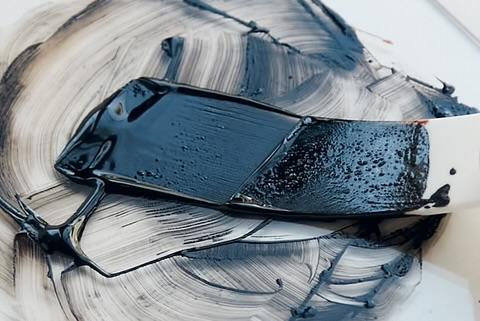
Raw Urushi is never used directly without transformation.
Key refining processes:
Nayashi (撹拌・精製)
• Continuous stirring and kneading
• Breaks down particles
• Improves smoothness and uniformity
Kurome (黒目)
• Gentle heating (~40°C)
• Reduces water content from ~30% to ~3%
• Enhances transparency and strength
These processes are rarely discussed in detail but are critical:
they define the quality, depth, and final optical behavior of the lacquer.
⸻
The Furo: A Microclimate for Transformation
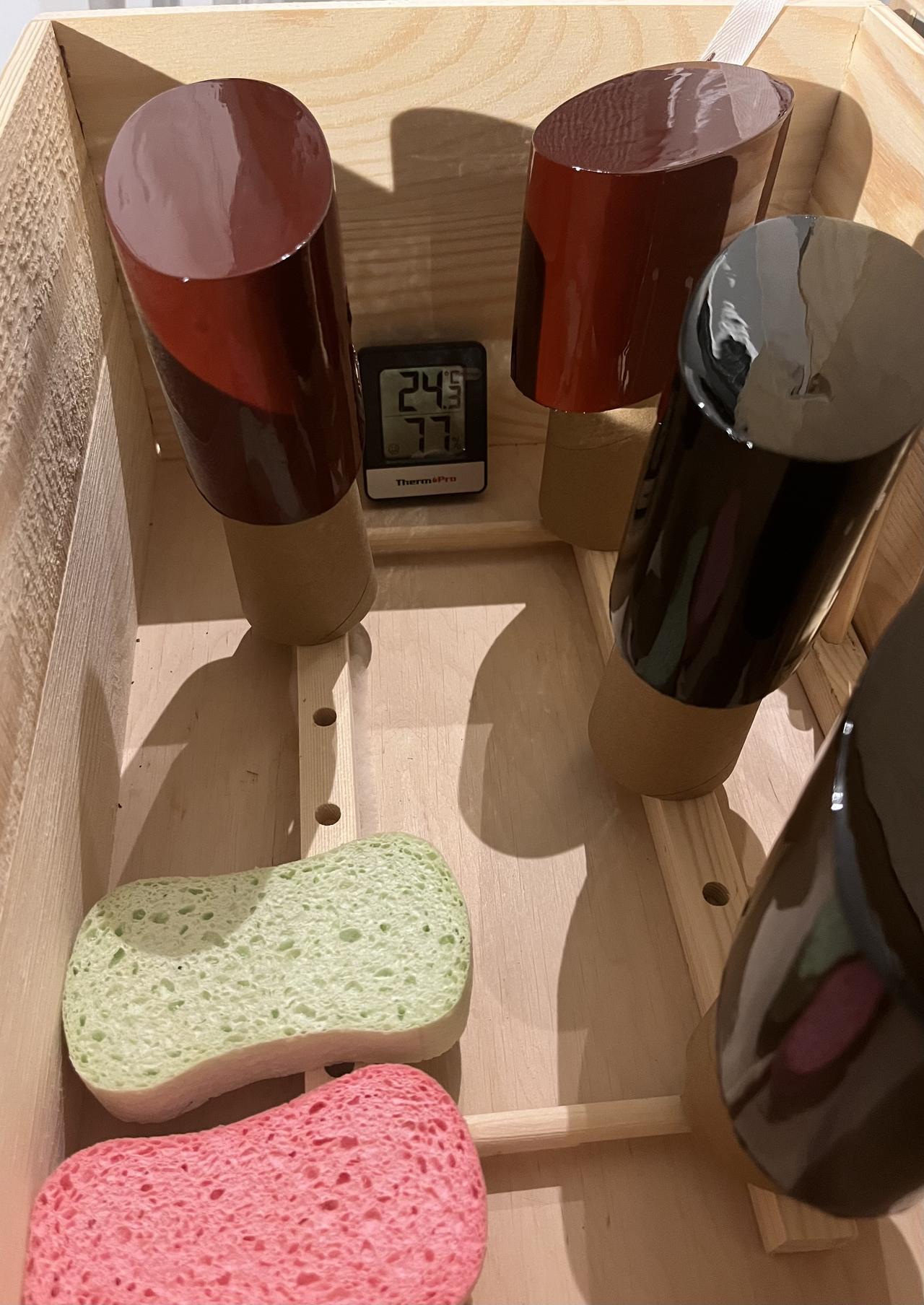
Urushi does not dry it cures in a controlled environment.
The furo (風呂) is a humidity chamber, traditionally made of hinoki wood.
• Maintains 80–90% humidity
• Encourages polymerization
• Prevents surface drying before internal curing
This is a subtle but essential point
Layering and Construction of Urushi
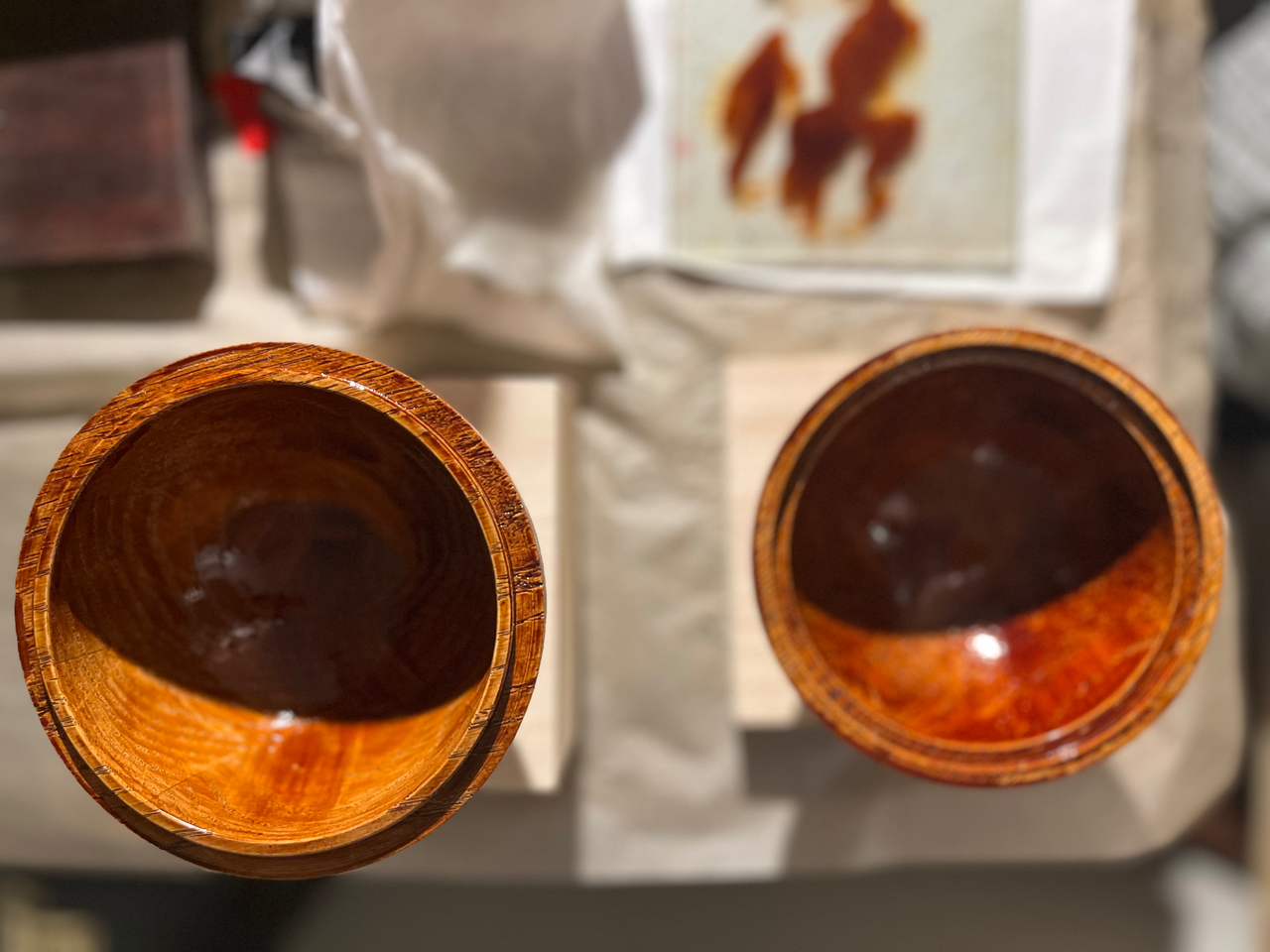
Urushi is not applied according to a single fixed sequence, but through a structured process traditionally divided into three main stages:
Foundation — Shitaji (下地)
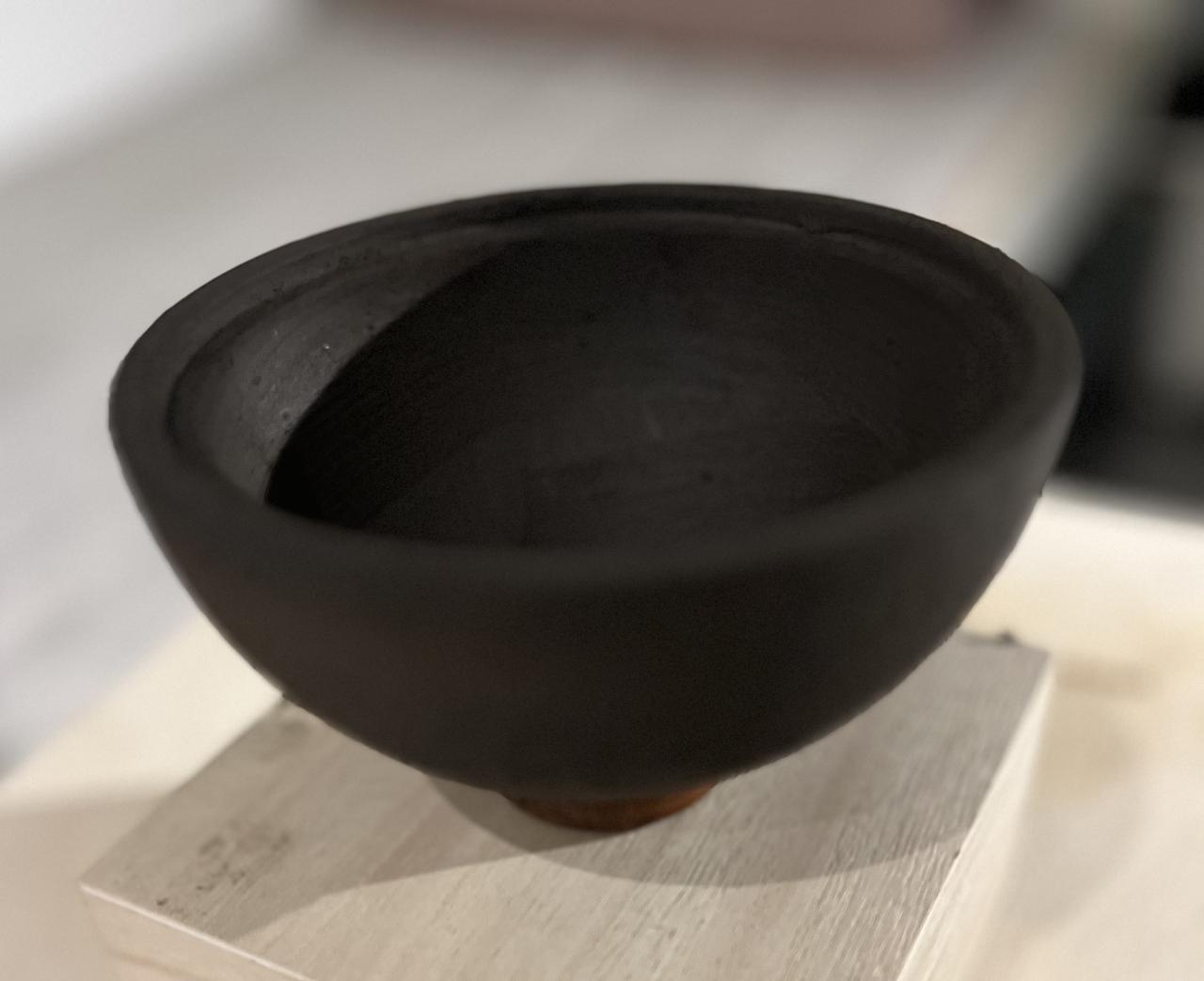
The term shitaji refers to the entire groundwork of the object. This stage is essential and often the most time-consuming.
It includes:
• Surface preparation
• Reinforcement of joints or weak areas
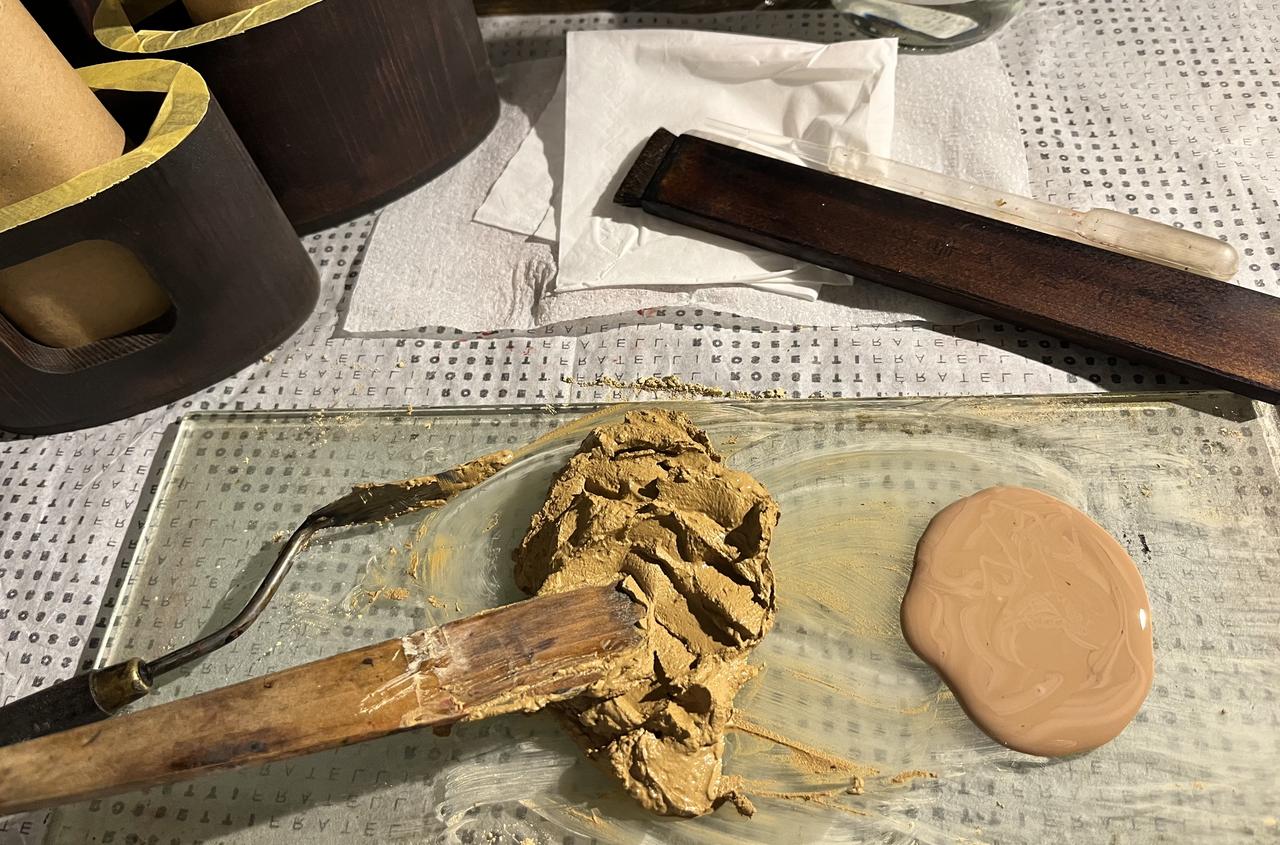
• Application of mixtures such as urushi combined with clay powders (e.g. tonoko or jinoko)
The purpose of shitaji is not decorative, but structural: it creates a stable, even, and durable base capable of receiving lacquer layers.
Intermediate Coating — Nakanuri / Chūnuri (中塗り)
This stage consists of one or several intermediate lacquer applications.
The role of nakanuri is to:
• Refine and unify the surface
• Eliminate irregularities from the foundation
• Prepare the object for the final coat
At this stage, the surface is often carefully leveled through controlled abrasion.
⸻
Final Coating — Uwanuri (上塗り)
Uwanuri is the final lacquer application that defines the visual and tactile quality of the piece.
Depending on the intended finish:
• The lacquer may be left as applied (e.g. hana-nuri, a glossy unpolished finish)
• Or further refined through polishing techniques
⸻
Finishing — Migaki (磨き) and Roiro-shiage (呂色仕上げ)
Finishing is not always required and depends entirely on the technique.
• Migaki refers to general polishing processes used to level and refine surfaces
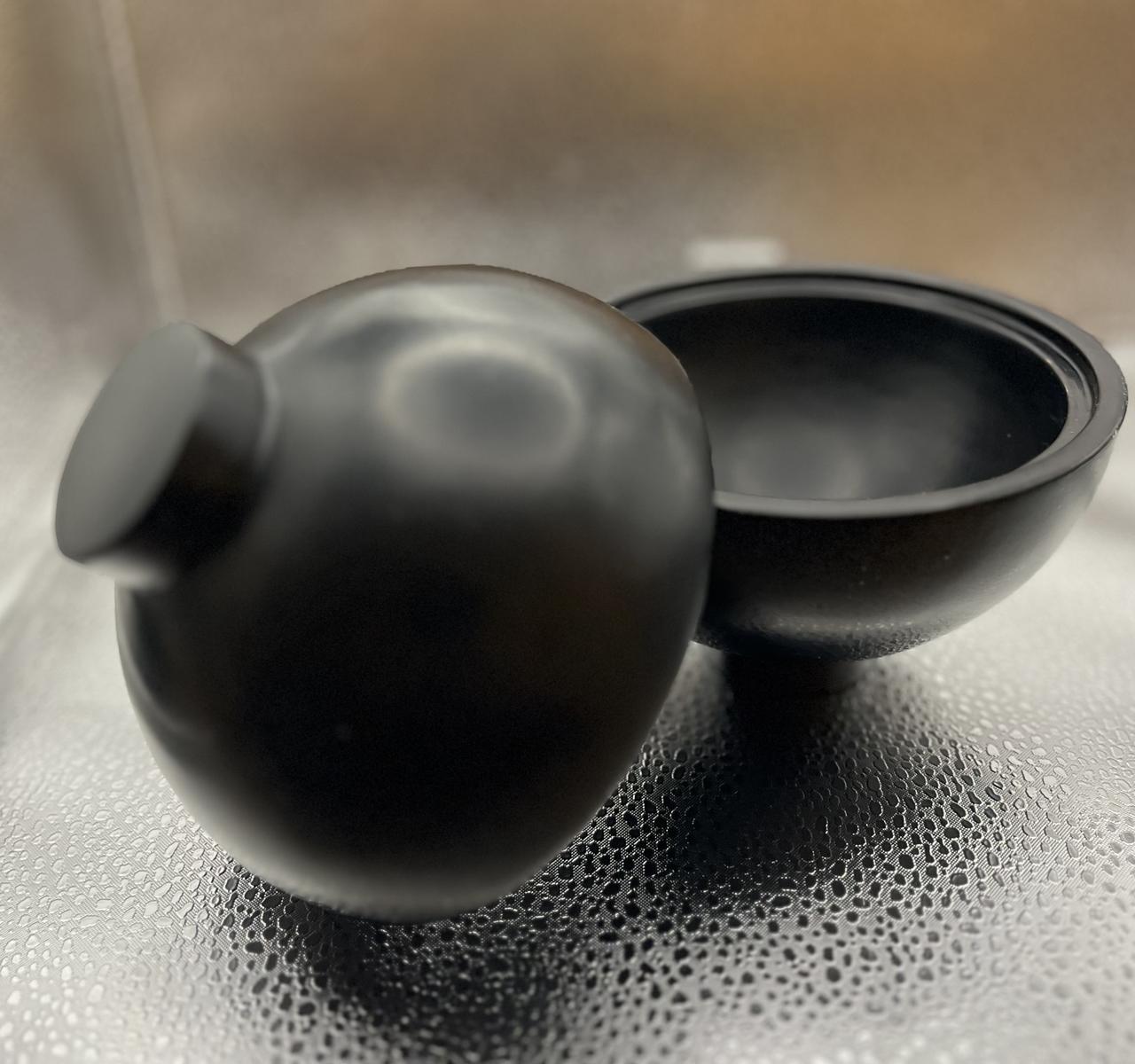
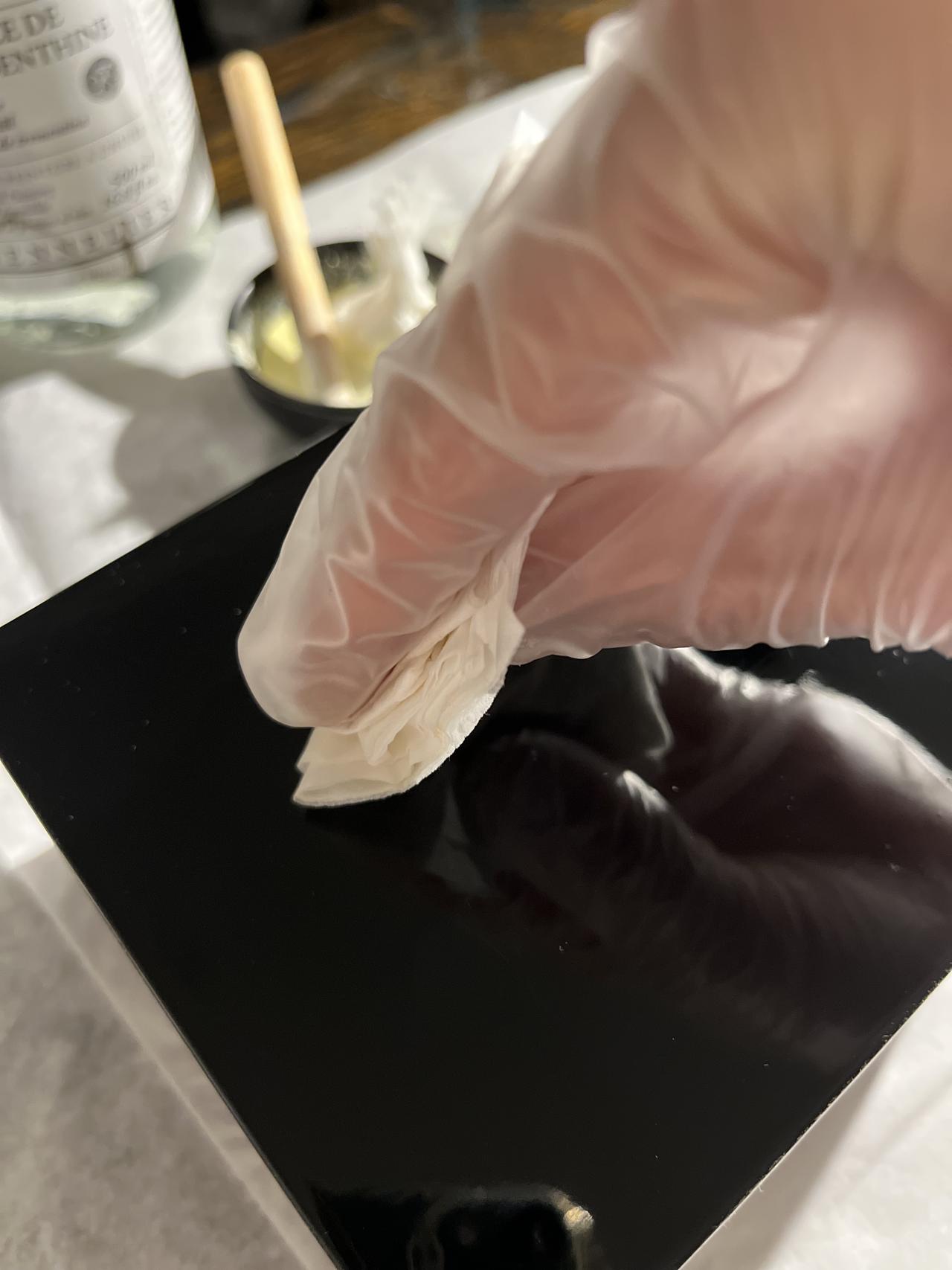
• Roiro-shiage is a highly specialized polishing technique used primarily for black lacquer, producing a deep mirror-like finish
In roiro-nuri, the process typically involves
• Undercoats and intermediate coats using refined lacque
• A final coat with roiro urush
• Followed by meticulous polishing using charcoal and fine abrasives
I
Important Clarification
There is no single universal layering formula in Urushi.
The exact process varies depending on:
• The regional tradition (e.g. Wajima-nuri, Aizu-nuri)
• The object (wood, ebonite, ceramic, etc.)
• The intended finish (polished, matte, transparent, textured)
Urushi should therefore be understood not as a fixed sequence, but as a method of construction, where each layer serves a specific structural or aesthetic purpose.
⸻
Optical Depth: Why Urushi Feels Alive
One of Urushi’s most elusive qualities is its visual depth.
This comes from:
• Semi-transparency of layers
• Light penetrating and reflecting between strata
• Polished surfaces acting like liquid mirrors
In techniques like roiro-migaki, the surface becomes so refined that it no longer reflects light it absorbs and emits it softly, creating what Japanese aesthetics describe as inner luminosity.
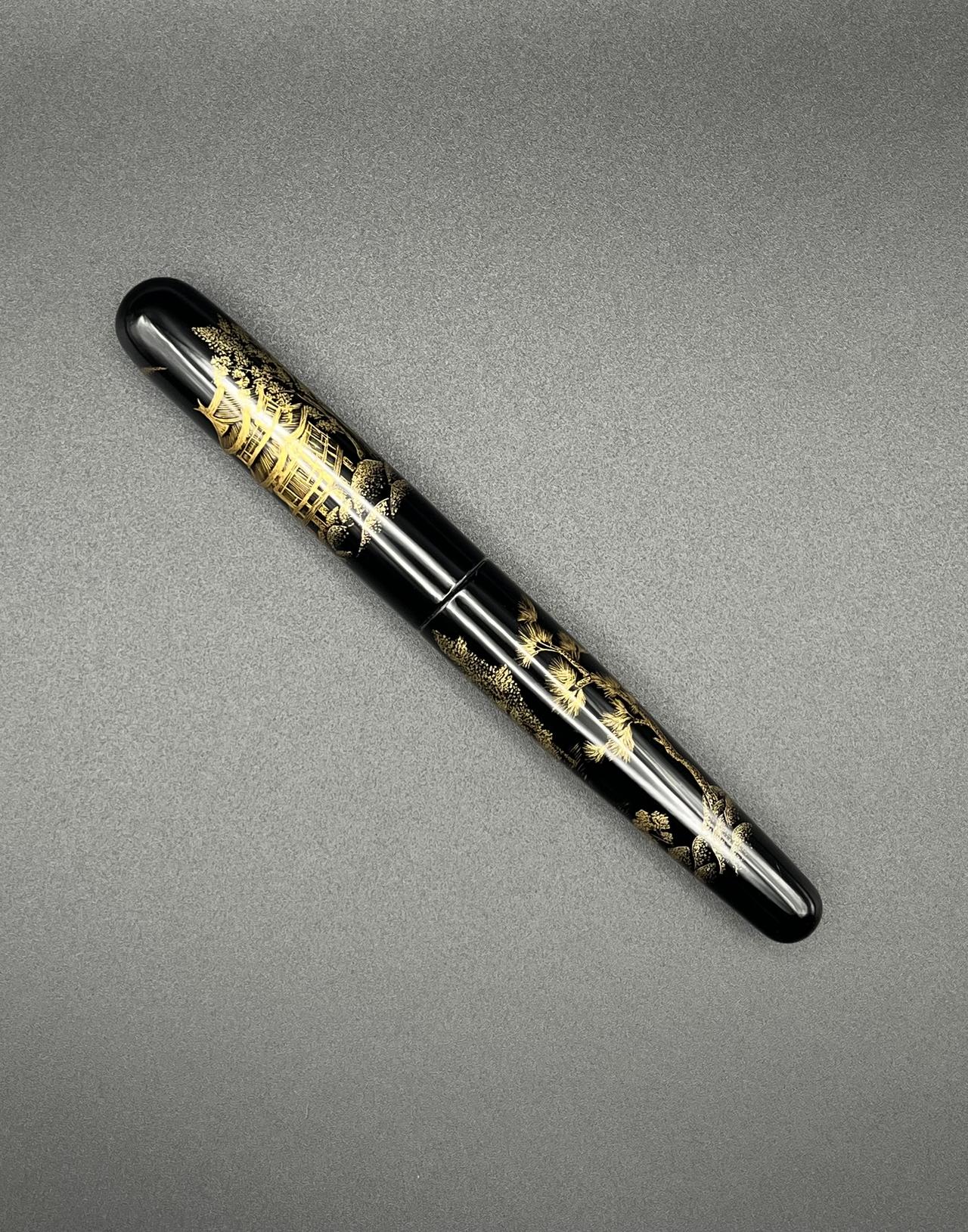
Techniques and Expression
Urushi is not limited to coating it is a medium of infinite expression:
• Maki-e (蒔絵) — sprinkling metal powders onto lacquer
• Chinkin (沈金) — engraving and filling with gold
• Kawari-nuri — layered pattern techniques revealed by polishing
• Shunkei-nuri — transparent lacquer revealing wood grain
Each technique exploits the material’s layering, adhesion, and optical depth.
Urushi as Philosophy
Beyond technique, Urushi embodies a worldview:
• It requires patience measured in weeks and months
• It transforms through humidity, not force
• It reveals beauty through subtraction and polishing
It is a material that cannot be rushed.
It demands a dialogue between time, environment, and the hand.
⸻
A Living Tradition
Today, Urushi remains one of the most refined craft traditions in Japan, yet it is also fragile:
• Fewer urushi trees are cultivated
• Fewer artisans master the full process
• Knowledge is transmitted through experience, not manuals
And yet, its relevance endures.
In an age of synthetic perfection, Urushi stands as a material of slowness, imperfection, and depth a living bridge between nature and human intention.
Having explained all that, we come to the conclusion that Urushi is not merely applied to an object. It becomes its skin, its memory, and its time. It begins as a toxic sap, and through patience, humidity, and human touch, it transforms into one of the most enduring surfaces ever created.
Resources:
• Urushi Laboratory — https://www.urushilab.com/urushi/
• Japan Insights — https://www.japan-insights.jp/pdf/essays/JIN_Urushi_01.pdf
• Dents de Lion Conservation — https://www.dentsdelion.com/NEWSLETTER/09_2012_09-10.pdf
• Kogei Styling — https://kogeistyling.com/pages/history-tradition-of-japanese-lacquerware
• Kyuseido Tokyo — https://www.kyuseidotokyo.com/libraryofknowledge/an-in-depth-introduction-to-urushi-lacquer-art
• Wikipedia — https://en.wikipedia.org/wiki/Lacquer
• Wikipedia — https://en.wikipedia.org/wiki/Japanese_lacquerware
• Tohoku Bureau of Economy, Trade and Industry — https://www.tohoku.meti.go.jp/s_densan/akita_02.html
• Tohoku Bureau of Economy, Trade and Industry — https://www.tohoku.meti.go.jp/s_densan/fukusima_01.html
• Wajima-nuri Official Site — https://www.wajimanuri.co.jp/entry/1794/
• Yamakyu Urushi — https://www.yamakyu-urushi.co.jp/shikki/289_292/